 Zhongshan city HaiShang Electric Appliances Co,. Ltd
 EN
EN



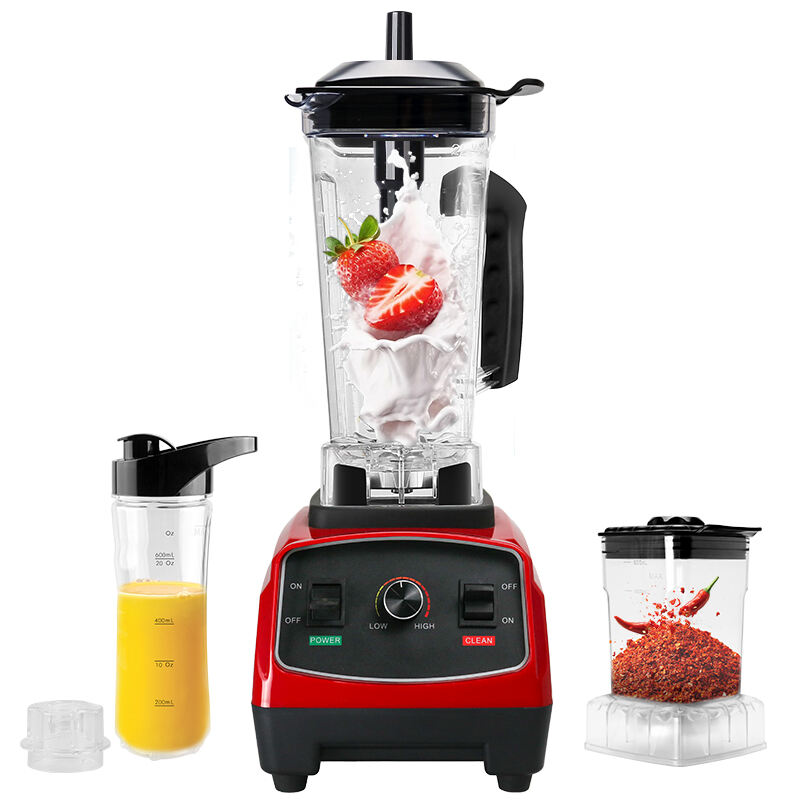
Choosing the right ice crusher blender for your kitchen is not as simple as picking the first model you come across. With so many options available across different price points, motor capacities, and design configurations, making the wrong decision can mean wasted money, poor performance, or a machine that simply does not match the demands of your daily kitchen routine. Whether you are equipping a home kitchen, a small café, or a commercial food preparation area, understanding what separates a capable ice crusher blender from a mediocre one is the first step toward a smart purchase.
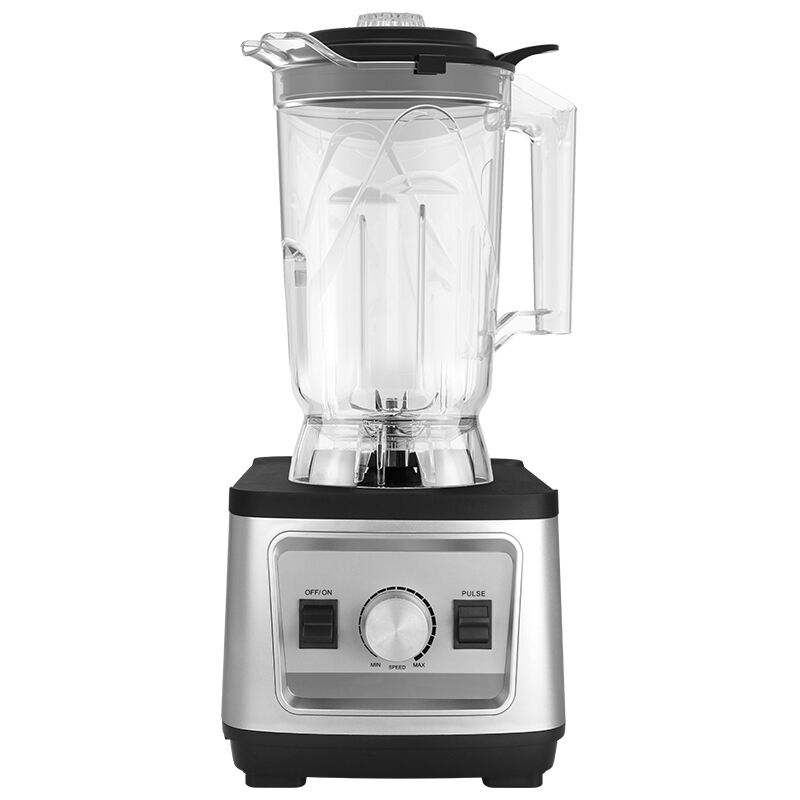
An ice crusher blender serves a very specific purpose: it must break down hard, dense ice into uniform fragments quickly and consistently while also handling other blending tasks if needed. The market offers everything from compact personal-use models to high-capacity commercial-grade machines. This guide walks you through the critical selection criteria so that you can confidently identify which ice crusher blender truly fits your kitchen environment, your usage frequency, and your practical expectations.
Understanding Motor Power and Its Role in Ice Crushing Performance
Why Motor Wattage Matters More Than You Think
When evaluating any ice crusher blender, motor power is often the most important technical specification to examine first. Ice is one of the hardest materials a blender will ever encounter, and an underpowered motor will struggle to produce consistent results, generate excessive heat, or simply burn out prematurely. For occasional home use, a motor in the 500–800 watt range may be sufficient for light ice crushing tasks. However, if you plan to make frozen cocktails, smoothies, or crushed ice in volume, you should be looking at motors rated at 1000 watts or higher.
A higher-wattage motor does not just mean faster crushing — it means the ice crusher blender can handle larger ice cubes, denser frozen ingredients, and back-to-back use cycles without overheating. In commercial kitchens or food service settings, continuous operation is a reality, and a motor that cannot sustain that demand will become a liability rather than an asset. Always check whether the motor wattage listed represents peak power or continuous operating power, as these two values can differ significantly.
Additionally, motor quality goes beyond raw wattage. Look for models that include thermal protection features, which automatically shut the machine down if it reaches unsafe operating temperatures. This extends the life of the ice crusher blender and protects both the motor and the user. Premium models often use copper-wound motors that run cooler and last longer compared to cheaper aluminum alternatives.
Matching Motor Capacity to Usage Volume
It is tempting to always opt for the highest wattage available, but matching motor capacity to realistic usage volume is equally important. An oversized industrial motor in a compact kitchen setup may draw unnecessary power and add cost without proportional benefit. Define your expected usage: how many cycles per day, what types of ingredients you will blend alongside ice, and whether you need the machine to handle continuous commercial operation or periodic home use.
A well-matched ice crusher blender performs reliably within its designed operating envelope. If you are primarily crushing ice for household drinks and occasional entertaining, a mid-range motor paired with a well-engineered blade system will serve you far better than an oversized unit that dominates your counter space. Conversely, if you run a smoothie bar or blended beverage station, investing in a high-capacity ice crusher blender from the outset prevents costly replacement cycles down the line.
Blade Design and Jar Capacity: The Structural Essentials
How Blade Configuration Affects Crushing Quality
The blades of an ice crusher blender are directly responsible for the texture of crushed ice and blended output. Not all blade assemblies are designed equally — the number of blades, their angle, their material composition, and their hardness all influence how efficiently ice is broken down and how uniform the final consistency is. Stainless steel blades with a hardened edge are the standard for any quality ice crusher blender, as they resist dulling under the mechanical stress of repeatedly hitting dense ice.
Multi-tiered blade assemblies, where blades are positioned at different heights within the jar, provide superior crushing because the ice is attacked from multiple angles simultaneously. This reduces the processing time and minimizes uneven chunks that clog the output or require re-blending. When reviewing product specifications, look for descriptions of blade configuration — a six-point or multi-level blade system generally outperforms a simple two-blade design for ice-heavy tasks.
Blade replacement availability is another practical concern. Over time, even high-quality blades can wear or sustain damage from contact with particularly hard materials. Choosing an ice crusher blender from a manufacturer that offers replacement blade assemblies ensures that the machine remains serviceable for years rather than requiring full replacement when a single component wears out.
Selecting the Right Jar Capacity for Your Kitchen
Jar capacity directly determines how much product you can process per cycle, and it must align with your actual serving or production needs. A jar that is too small forces repeated batch processing, which increases wear on the motor and extends preparation time. A jar that is too large for a small household setting is impractical, difficult to clean, and often heavier than necessary for daily handling.
For most home kitchens, an ice crusher blender with a 1.5–2 liter jar offers a practical balance between batch capacity and manageable size. For commercial or semi-commercial applications — such as a juice bar or event catering setup — jars in the 3–5 liter range provide the throughput needed to keep up with demand. The 4-liter capacity found in certain professional models strikes an excellent balance between volume and countertop practicality, making it a popular choice for both high-volume home use and light commercial environments.
Jar material also matters. Polycarbonate jars are lightweight and impact-resistant but may absorb odors over time. Stainless steel jars are hygienic and durable but prevent visual monitoring of the blending process. Glass jars offer the best clarity and do not absorb odors, but they add weight and are more vulnerable to impact. Consider which trade-offs best suit your kitchen environment when selecting your ice crusher blender.
Speed Settings, Controls, and Safety Features
Why Variable Speed Control Enhances Versatility
An ice crusher blender with multiple speed settings offers far greater flexibility than a single-speed model. Different tasks require different processing intensities: coarse ice crushing demands a brief, high-speed burst, while smooth blending of fruits and liquids benefits from a gradual ramp-up followed by sustained medium speed. Variable speed control allows you to manage texture precisely, preventing over-processing that turns crushed ice into watery mush or under-processing that leaves large, uneven chunks.
Many quality ice crusher blender models also include a dedicated pulse function. This is particularly useful for ice crushing, as short pulse bursts allow you to control the coarseness of the output without committing to a full blending cycle. Pulse control is a feature that experienced kitchen professionals rely on heavily and one that home users quickly learn to appreciate once they have worked with it.
Preset programs, available on more advanced models, simplify operation for repetitive tasks. Ice crush modes, smoothie programs, and timed cycles automate the process and reduce operator error. For commercial environments where staff training time is limited, intuitive controls and preset functions on an ice crusher blender can meaningfully improve workflow efficiency and consistency of output.
Safety Features That Protect Both the User and the Machine
Safety should never be an afterthought when choosing an ice crusher blender. Look for lid-locking mechanisms that prevent accidental opening during operation — a critical feature given the high rotational speeds involved. A well-designed locking system ensures that the lid cannot be removed while the blades are spinning, protecting against splatter and, more seriously, contact with the blade assembly.
Anti-slip base designs keep the ice crusher blender stable during vigorous operation, particularly important when crushing ice, which creates significant vibration and mechanical stress. Non-slip rubber feet or weighted bases prevent the unit from walking across the counter surface, which is both a safety concern and a noise nuisance in kitchen environments.
Overload protection circuits are another important safety feature to verify. These circuits detect when the motor is being pushed beyond its rated capacity and automatically cut power before damage occurs. An ice crusher blender equipped with overload protection will outlast comparable models without this feature, especially in environments where heavy use is routine.
Build Quality, Cleaning Ease, and Long-Term Value
Assessing Durability Through Construction Materials
The longevity of an ice crusher blender depends heavily on the quality of its construction. The motor housing, blade assembly, jar, and coupling mechanism all experience significant mechanical stress during ice crushing operations. Units built with food-grade materials, reinforced gear systems, and robust motor mounts will hold up far better over years of use compared to budget models constructed from lightweight plastics and minimal-tolerance components.
Pay attention to the coupling between the jar and the motor base. This connection point takes the full force of the motor during operation, and weak couplings are a common failure point in lower-quality ice crusher blender models. Metal drive couplings are far more durable than plastic alternatives and should be a priority for any unit intended for frequent use.
The overall weight of the unit can also be an indicator of build quality. Heavier machines typically incorporate more substantial motor components, denser housing materials, and more robust internal structures. While portability has its advantages, an ice crusher blender that feels excessively light for its stated specifications may be compromising on internal construction to achieve a lower price point.
Ease of Cleaning and Hygienic Maintenance
In a busy kitchen environment, a machine that is difficult to clean will eventually be neglected, and a neglected ice crusher blender becomes a hygiene risk and a performance liability. Prioritize models where the jar, lid, and blade assembly can be fully disassembled for thorough cleaning. Smooth interior surfaces without hard-to-reach crevices minimize residue buildup and reduce cleaning time.
Many modern ice crusher blender models are designed with self-cleaning functionality, where adding water and a drop of dish soap followed by a short blending cycle cleans the interior effectively. This is a significant convenience feature for commercial settings where turnaround time between uses is critical. Always verify whether the jar components are dishwasher-safe if that is part of your cleaning workflow.
Maintaining blade sharpness through regular inspection and occasional replacement is also part of responsible ownership. A sharp, well-maintained blade assembly ensures that your ice crusher blender continues to deliver consistent texture and performance rather than gradually degrading as blades dull. Build a simple maintenance schedule into your kitchen operations to maximize the machine's service life.
FAQ
What is the minimum motor power I should look for in an ice crusher blender for home use?
For home use, a minimum of 600–800 watts is generally recommended for reliable ice crushing performance. If you plan to use the ice crusher blender frequently or for larger batches, a 1000-watt or higher model provides more consistent results and greater durability over time.
Can I use an ice crusher blender for tasks other than crushing ice?
Yes, most quality ice crusher blender models are versatile enough to handle smoothies, soups, sauces, and other blending tasks. The key is to choose a model with variable speed settings and a robust blade assembly that can transition effectively between hard ice crushing and softer ingredient blending without requiring adjustment or replacement parts.
How do I know if an ice crusher blender is suitable for commercial kitchen use?
Look for commercial-grade specifications including continuous-duty motor ratings, high jar capacity (3 liters or above), stainless steel blade assemblies, overload protection, and NSF or equivalent food safety certifications. A commercially rated ice crusher blender is engineered for repeated daily cycles, whereas a residential model is designed for intermittent use and will wear out quickly under commercial demand.
How often should I replace the blades on my ice crusher blender?
Blade replacement frequency depends on usage intensity and the hardness of materials being processed. In a home kitchen with moderate use, blades may last several years before showing noticeable dulling. In commercial environments with daily ice crushing, inspecting blades every six months and replacing them annually is a reasonable maintenance guideline. Always follow the manufacturer's recommendations for your specific ice crusher blender model.
Table of Contents
- Understanding Motor Power and Its Role in Ice Crushing Performance
- Blade Design and Jar Capacity: The Structural Essentials
- Speed Settings, Controls, and Safety Features
- Build Quality, Cleaning Ease, and Long-Term Value
-
FAQ
- What is the minimum motor power I should look for in an ice crusher blender for home use?
- Can I use an ice crusher blender for tasks other than crushing ice?
- How do I know if an ice crusher blender is suitable for commercial kitchen use?
- How often should I replace the blades on my ice crusher blender?