 Zhongshan city HaiShang Electric Appliances Co,. Ltd
 EN
EN



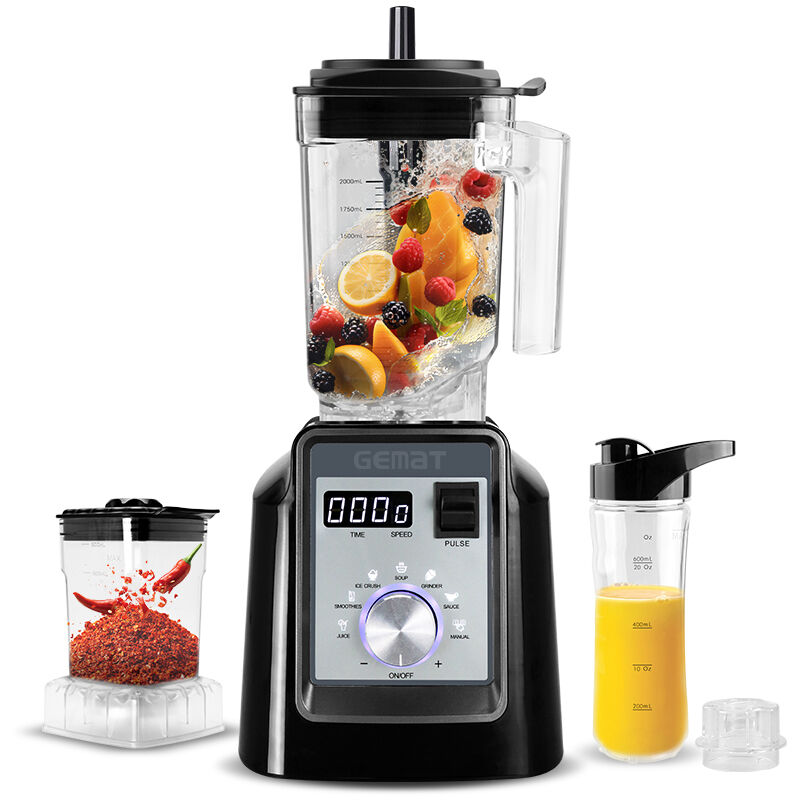
Anyone who has ever started a morning smoothie only to wake the entire household knows the problem intimately. Blending is one of the loudest routine tasks in any kitchen, and the noise it generates is not just an annoyance — it disrupts conversations, disturbs sleeping family members, and creates real tension in shared living spaces, offices, and commercial environments. The Soundproof Blender has emerged as a direct engineering response to this problem, promising to deliver the same blending power while dramatically reducing the acoustic footprint of the process.
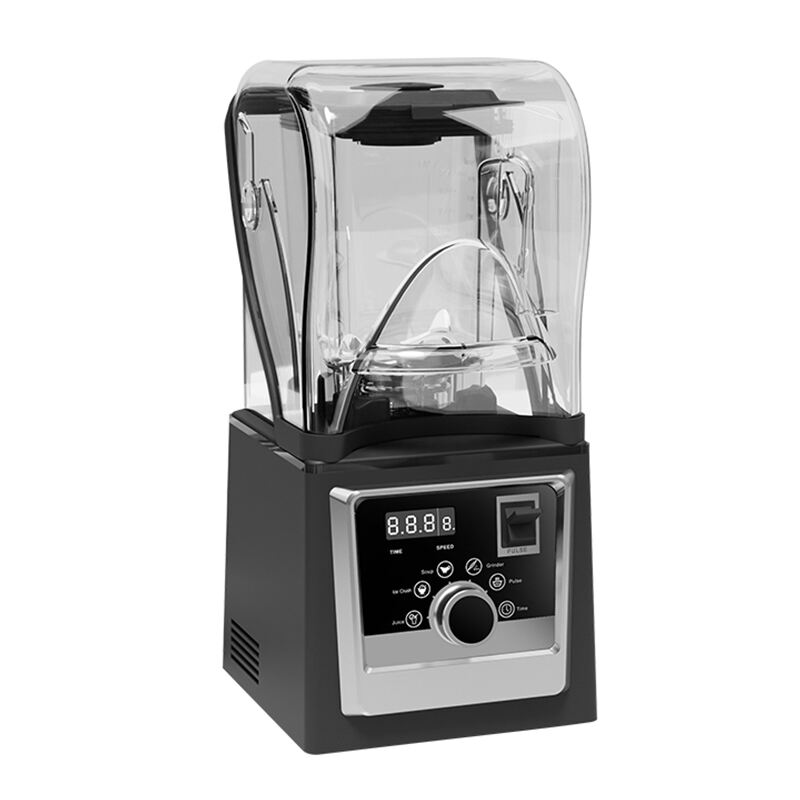
But is a soundproof blender truly the best solution for peaceful cooking, or is it simply a premium feature that sounds better in marketing than it performs in practice? The answer depends on understanding what this technology actually does, where it excels, and whether the trade-offs align with your specific kitchen environment and daily habits. This article examines the real-world value of the soundproof blender with the depth and honesty that B2B buyers, commercial kitchen operators, and discerning home users deserve.
Understanding What a Soundproof Blender Actually Does
The Engineering Behind Noise Reduction
A soundproof blender does not eliminate sound entirely — that would be physically impossible given the mechanical forces involved in high-speed blending. What it does is contain and absorb the acoustic energy generated by the motor and blade assembly through a purpose-built enclosure. This enclosure is typically constructed from dense, vibration-dampening materials such as reinforced polycarbonate, ABS plastic with internal foam lining, or composite panels designed to interrupt sound wave transmission.
The enclosure works on two principles simultaneously. First, it creates a physical barrier that prevents airborne sound from radiating outward into the room. Second, it absorbs vibration at the contact points between the blender base and the countertop, which is a significant but often overlooked source of transmitted noise. Together, these mechanisms can reduce perceived noise levels by 20 to 30 decibels in well-engineered models, bringing a blending cycle from a disruptive 90 dB down to a conversational 60 to 65 dB range.
This is not a trivial reduction. Human hearing perceives sound on a logarithmic scale, meaning a 10 dB drop represents roughly a halving of perceived loudness. A well-designed soundproof blender can therefore make the blending process feel dramatically quieter even if it is not technically silent. For anyone operating in a noise-sensitive environment, this difference is immediately and practically meaningful.
How the Soundproof Blender Differs from Standard Models
Standard blenders are designed primarily around blending performance — motor wattage, blade geometry, jar capacity, and speed settings. Acoustic management is rarely a primary design consideration, which is why conventional blenders are so loud. The motor runs at high RPM, the blades create turbulence and cavitation, and the entire assembly vibrates against whatever surface it sits on, amplifying the noise further.
A soundproof blender, by contrast, integrates acoustic engineering into the product design from the outset. The enclosure is not an afterthought or an accessory — it is a structural component of the product. This means the jar, the lid seal, the base, and the enclosure are all designed to work together as a unified noise-management system. The result is a product that can match or exceed the blending performance of standard models while operating at a fraction of the noise output.
For commercial environments such as cafes, hotel lobbies, open-plan offices, and hospital kitchens, this distinction is critical. A standard blender in these settings creates a disruptive acoustic event every time it runs. A soundproof blender allows blending to happen as a background activity, invisible to the people nearby.
Where a Soundproof Blender Delivers the Most Value
Commercial and Hospitality Settings
The commercial case for a soundproof blender is arguably stronger than the residential one. In a cafe or juice bar, blending happens dozens or hundreds of times per day. Each blending cycle in a standard machine creates a noise spike that interrupts customer conversations, forces staff to raise their voices, and contributes to overall ambient noise fatigue. Over the course of a busy service period, this accumulates into a genuinely poor customer experience.
A soundproof blender in this context is not a luxury — it is a service quality investment. Customers can continue their conversations uninterrupted. Staff can communicate clearly without shouting over the machine. The overall atmosphere of the space is preserved. For premium hospitality brands where ambiance is a core part of the value proposition, the soundproof blender pays for itself in customer satisfaction and repeat business.
Hotel breakfast stations, corporate wellness kitchens, and smoothie counters in fitness facilities face the same challenge. In each case, the soundproof blender allows the operation to run efficiently without creating acoustic disruption for the people the operation is meant to serve.
Residential Use Cases Where Noise Matters Most
In the home, the value of a soundproof blender is most pronounced in specific scenarios. Early morning blending is the most common pain point — preparing a smoothie or protein shake before the rest of the household is awake is a daily ritual for many people, and a standard blender makes it an act of inconsideration. A soundproof blender removes this conflict entirely.
Open-plan living spaces present a similar challenge. When the kitchen is not separated from the living area by walls and doors, blending noise travels freely into spaces where people are working, relaxing, or watching television. The soundproof blender contains that noise at the source, preserving the usability of the entire open-plan space during blending cycles.
Households with infants, light sleepers, or individuals who work from home also benefit disproportionately. In these environments, the ability to blend without triggering a noise complaint or waking a sleeping child is not a minor convenience — it is a meaningful quality-of-life improvement that justifies the investment in a soundproof blender.
Evaluating Whether a Soundproof Blender Is the Right Choice
Performance Considerations
One concern that buyers sometimes raise is whether the enclosure design of a soundproof blender compromises blending performance. This is a legitimate question, and the honest answer is that it depends on the specific product. Lower-quality soundproof blenders may use underpowered motors to reduce noise at the source, which limits their ability to handle tough ingredients like frozen fruit, ice, nuts, and fibrous vegetables.
Well-engineered soundproof blenders, however, use full-power motors and rely on the enclosure to manage the acoustic output rather than reducing motor speed. These models can handle the same ingredient range as premium standard blenders while still delivering the noise reduction that makes them valuable. When evaluating a soundproof blender, motor wattage, blade quality, and jar capacity should be assessed with the same rigor as any other blender purchase.
It is also worth noting that the enclosure design of a soundproof blender typically requires the user to lower the lid before blending begins, which adds a small step to the workflow. For high-volume commercial operations, this is a negligible adjustment. For home users, it quickly becomes second nature.
Practical Fit for Different Kitchen Environments
Not every kitchen environment has the same noise sensitivity, and a soundproof blender is not the optimal choice in every situation. In a standalone kitchen with solid walls and doors, a standard blender may produce acceptable noise levels that do not justify the additional investment. In these cases, the soundproof blender is a preference rather than a necessity.
However, in any environment where blending noise creates friction — whether that is a customer complaint, a household conflict, or a workplace distraction — the soundproof blender addresses the root cause directly. It does not require behavioral changes like blending only at certain times or moving the blender to a different room. It solves the problem at the point of origin, which is the most efficient and sustainable solution.
Countertop space is another practical consideration. The enclosure of a soundproof blender adds physical bulk compared to a standard model. Buyers should verify that their available counter space accommodates the footprint of the specific soundproof blender they are considering, particularly in compact residential kitchens or tight commercial prep areas.
The Long-Term Case for Investing in a Soundproof Blender
Durability and Maintenance Factors
A soundproof blender represents a higher upfront investment than a standard blender, and buyers naturally want to understand whether that investment holds up over time. The enclosure components — particularly the seals, hinges, and locking mechanisms — are subject to wear and should be evaluated for build quality before purchase. A well-constructed soundproof blender with robust enclosure hardware will maintain its noise-reduction performance over years of regular use.
Cleaning is another maintenance consideration. The enclosure of a soundproof blender adds surfaces that need to be wiped down, and the interior of the enclosure can accumulate splatter if the jar seal is not properly maintained. Most commercial-grade soundproof blenders are designed with this in mind, using smooth interior surfaces and accessible enclosure geometry that makes cleaning straightforward.
Motor longevity in a soundproof blender is generally comparable to standard blenders of equivalent quality. The enclosure does not create additional thermal stress on the motor, provided the ventilation design is adequate. Buyers should confirm that the soundproof blender they are considering has appropriate motor ventilation to prevent heat buildup during extended use.
Total Value Assessment for B2B Buyers
For B2B buyers evaluating a soundproof blender for commercial deployment, the total value calculation should extend beyond the purchase price. Consider the cost of customer experience degradation caused by blending noise in a hospitality setting, the productivity impact of noise disruption in a workplace kitchen, and the staff communication challenges created by repeated high-decibel blending cycles in a busy service environment.
When these factors are quantified, the premium associated with a soundproof blender often represents a straightforward return on investment. A single customer who chooses a competitor cafe because the blending noise was too disruptive represents a recurring revenue loss that quickly exceeds the cost difference between a standard and a soundproof blender.
For procurement teams sourcing equipment for multiple locations, the soundproof blender also offers a standardization benefit. Deploying a consistent noise-managed blending solution across all sites ensures a uniform customer and staff experience regardless of the specific acoustic characteristics of each individual location.
FAQ
How much quieter is a soundproof blender compared to a standard blender?
A well-engineered soundproof blender typically reduces perceived noise by 20 to 30 decibels compared to a standard blender of equivalent power. This brings the operating noise level from approximately 85 to 95 dB down to the 60 to 65 dB range, which is roughly equivalent to a normal conversation. The exact reduction varies by model and depends on the quality of the enclosure design and the motor configuration.
Can a soundproof blender handle the same ingredients as a standard high-performance blender?
Yes, provided the soundproof blender uses a full-power motor rather than relying on motor speed reduction to achieve noise control. Quality soundproof blenders are capable of processing frozen fruit, ice, nuts, seeds, and fibrous vegetables with the same efficiency as standard high-performance models. The key is to evaluate motor wattage and blade specifications rather than assuming that noise reduction comes at the cost of blending power.
Is a soundproof blender worth the investment for a small home kitchen?
The value depends on your specific situation. If blending noise creates genuine friction in your household — waking family members, disrupting work-from-home routines, or conflicting with open-plan living — then a soundproof blender addresses that problem directly and sustainably. If your kitchen is well-isolated and noise is not a meaningful concern, the investment may not be necessary. For households with infants, light sleepers, or early-morning blending habits, the soundproof blender is typically worth the premium.
What should I look for when choosing a soundproof blender for commercial use?
For commercial applications, prioritize motor wattage sufficient for your ingredient range, enclosure build quality with durable seals and locking mechanisms, ease of cleaning, and verified noise reduction specifications from the manufacturer. Also assess the blending cycle capacity relative to your service volume — a soundproof blender that requires frequent stops for cooling will create operational bottlenecks in high-demand environments. Commercial-grade soundproof blenders are designed for continuous use and should be evaluated against those standards.
Table of Contents
- Understanding What a Soundproof Blender Actually Does
- Where a Soundproof Blender Delivers the Most Value
- Evaluating Whether a Soundproof Blender Is the Right Choice
- The Long-Term Case for Investing in a Soundproof Blender
-
FAQ
- How much quieter is a soundproof blender compared to a standard blender?
- Can a soundproof blender handle the same ingredients as a standard high-performance blender?
- Is a soundproof blender worth the investment for a small home kitchen?
- What should I look for when choosing a soundproof blender for commercial use?