 Zhongshan city HaiShang Electric Appliances Co,. Ltd
 EN
EN



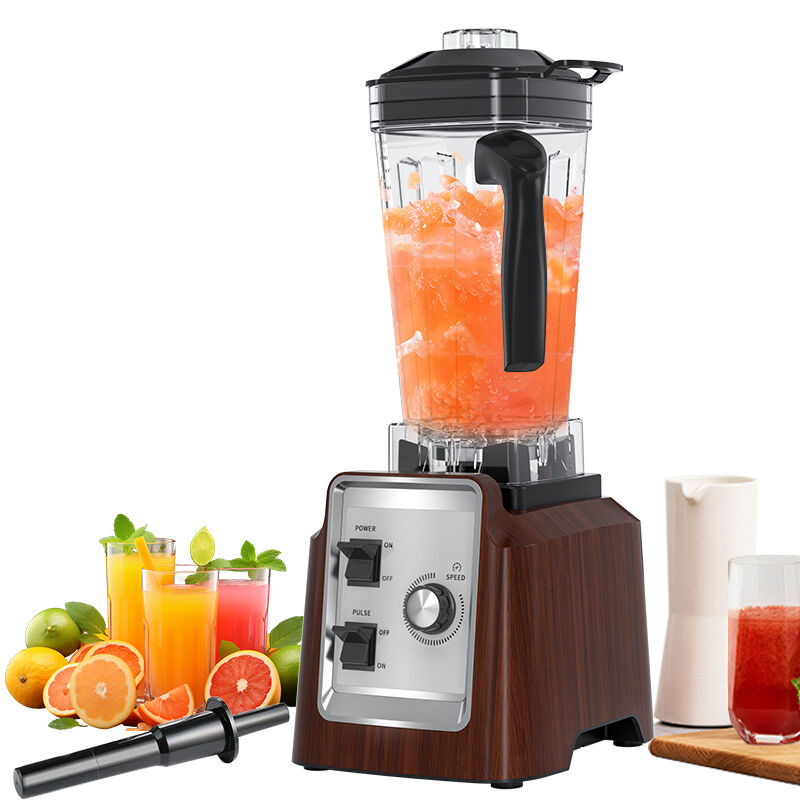
A modern kitchen is a place of creativity, nourishment, and often, community. Yet one of the most disruptive forces in any kitchen environment is the piercing noise of a conventional blender at full power. Whether you are blending a morning smoothie while the rest of the household sleeps, preparing ingredients during a busy service in a commercial setting, or simply trying to hold a conversation while cooking, the relentless roar of a standard blending machine creates genuine friction. This is precisely why the Soundproof Blender has moved from a niche luxury item to an essential kitchen appliance for households and professionals who value both performance and tranquility.
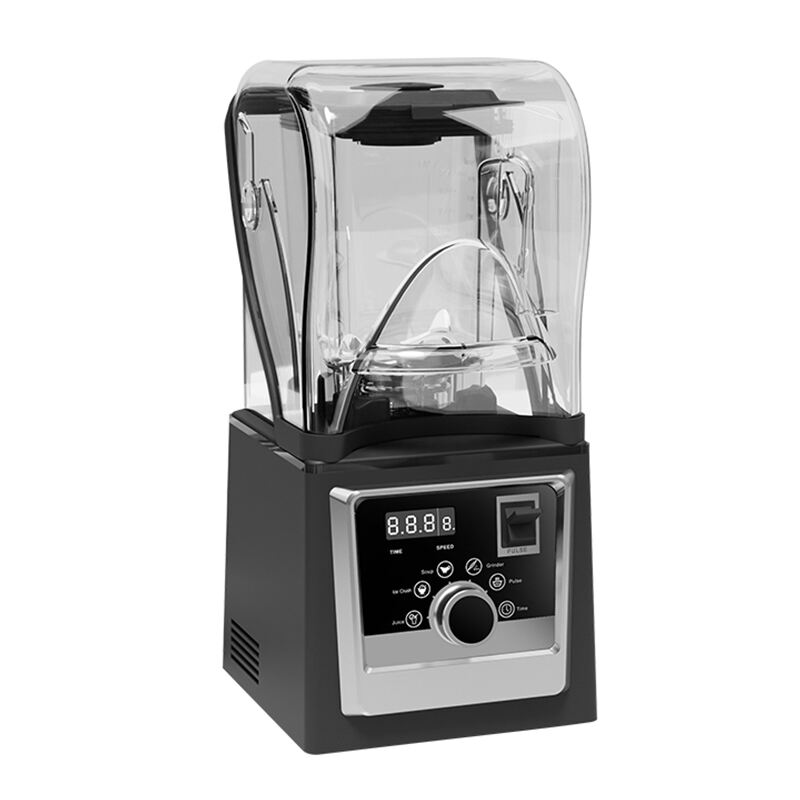
The concept of a quiet kitchen is not simply about aesthetics or comfort preferences. It reflects a deeper understanding of how noise affects productivity, concentration, health, and the overall experience of being in a shared space. A Soundproof Blender addresses this challenge by engineering acoustic reduction directly into the appliance design, delivering the full blending power professionals and home cooks demand without the sound pollution that typically accompanies it. Understanding why this technology matters and how it fits into the modern kitchen reveals a great deal about the direction of smart appliance design.
The Real Cost of Kitchen Noise
How Blender Noise Disrupts Daily Life
Blender noise is not just a minor annoyance. Research on occupational and environmental noise consistently shows that prolonged exposure to high-decibel sounds — even in domestic environments — contributes to elevated stress hormone levels, reduced concentration, and disrupted sleep patterns. A standard high-performance blender can produce noise levels ranging from 80 to over 100 decibels, comparable to a chainsaw or a jackhammer at close range. In an open-plan home where the kitchen connects directly to living spaces and bedrooms, running a conventional blender at 6 AM becomes a significant household issue.
For families with young children, shift workers, or anyone sensitive to sound, this creates real quality-of-life consequences. The Soundproof Blender changes this dynamic fundamentally. By enclosing the blending mechanism within an acoustic dampening shield or housing, these machines reduce operational noise to levels often below 75 decibels — some premium models achieving even lower results. That difference in decibels may seem modest in numbers, but the human ear perceives sound on a logarithmic scale, meaning even a 10-decibel reduction cuts perceived loudness roughly in half.
This makes the choice of a Soundproof Blender a meaningful quality-of-life decision rather than merely a luxury upgrade. When blending no longer wakes sleeping family members or interrupts focused work sessions happening nearby, the kitchen becomes a more harmonious shared environment for everyone.
Noise in Commercial and Professional Kitchen Settings
The issue of blender noise extends beyond residential kitchens into cafes, juice bars, hotel breakfast stations, office kitchens, and open-plan restaurant environments. In these settings, customers and staff are in close proximity, and the sudden burst of blending noise can interrupt conversations, reduce perceived service quality, and create a jarring experience that contrasts sharply with the ambiance the establishment works hard to cultivate.
Hospitality businesses understand that customer experience is defined by sensory totality — not just taste and presentation, but sound and comfort. A cafe that uses a Soundproof Blender to prepare smoothies or blended coffees sends a clear message about its attention to the guest experience. Staff also benefit significantly, as repeated exposure to high-decibel blending throughout a working day contributes to hearing fatigue and communication difficulty between team members.
Incorporating a Soundproof Blender into a commercial setting is therefore both an employee wellness consideration and a customer satisfaction strategy. It is a practical tool that supports the kind of calm, professional environment that modern hospitality spaces actively pursue.
Engineering Behind the Silence
Acoustic Enclosure Technology
The defining feature of a Soundproof Blender is its acoustic enclosure — a specially designed housing that surrounds the blending jar and motor assembly to absorb, block, and dissipate the sound waves generated during operation. This enclosure is typically constructed from multiple layers of dense, sound-absorbing materials combined with a rigid outer shell that prevents sound from radiating outward. The inner surfaces are engineered to trap vibrational energy rather than reflect it back into the surrounding environment.
High-quality acoustic enclosures are designed with precision-fit tolerances so that the sound barrier remains sealed during blending, preventing any significant sound leakage through gaps or joints. The effectiveness of a Soundproof Blender depends heavily on how well this enclosure integrates with the machine's overall mechanical design. A poorly executed enclosure might reduce noise marginally while also restricting airflow to the motor, creating heat buildup and reducing the longevity of the appliance.
Premium Soundproof Blender designs solve this challenge by incorporating ventilation channels that manage motor temperature without compromising acoustic performance. The result is a machine that can run at full commercial-grade blending power for extended periods while maintaining a dramatically reduced sound output compared to open-design blenders.
Motor and Vibration Damping Systems
Noise from a blender originates from two primary sources: the motor's rotational energy and the mechanical vibration transmitted through the machine's frame and base into surrounding surfaces. Addressing only one of these sources produces limited results. A truly effective Soundproof Blender targets both simultaneously through a combination of motor design optimization and active vibration damping at the base and mounting points.
Advanced motor configurations used in high-end Soundproof Blender models minimize electromagnetic interference noise and reduce mechanical resonance within the motor housing. At the base level, rubberized dampening feet and isolation mounts prevent vibration from transferring to countertops, which would otherwise act as resonance chambers and amplify the perceived sound significantly. These engineering choices compound together to create a blending experience that feels noticeably quieter from the very first use.
Understanding this dual-source approach to noise reduction helps buyers appreciate why a genuine Soundproof Blender commands a higher price point than a standard machine. The engineering investment required to suppress noise at both the acoustic and vibrational level is substantial, and it reflects directly in the performance difference experienced in a real kitchen environment.
Benefits That Go Beyond Noise Reduction
Preserving Kitchen Ambiance and Workflow
One of the most underappreciated benefits of a Soundproof Blender is how it enables uninterrupted workflow in the kitchen. In a professional kitchen brigade, communication is constant and critical. Shouted instructions, coordination of timing, and real-time feedback between cooks and front-of-house staff all depend on the ability to hear and be heard clearly. When a conventional blender dominates the soundscape, this communication breaks down, leading to errors, delays, and frustration.
With a Soundproof Blender in operation, the kitchen team can continue working and communicating normally even while blending tasks are being performed. This improvement in workflow efficiency may seem intangible, but over the course of a busy service period it translates into measurably better kitchen performance and lower error rates. Home cooks experience a parallel benefit — they can blend a sauce or smoothie while simultaneously holding a phone conversation, listening to a podcast, or simply enjoying the calm of a quiet morning kitchen.
The Soundproof Blender also makes it easier to monitor the blending process itself. When the surrounding noise is reduced, operators can hear subtle changes in the motor's behavior — changes that might indicate an overfull jar, a piece of ice that needs repositioning, or a blend that has reached optimal consistency. This sensory feedback loop is genuinely useful and is entirely lost when a conventional blender drowns out all auditory cues.
Supporting Health-Conscious and Early-Morning Routines
The wellness movement has brought blending into daily rituals for millions of people worldwide. Protein shakes before the gym, green smoothies at dawn, blended soups for meal prep — these habits are widespread, yet the noise barrier created by standard blenders creates real friction for people who practice these routines at hours when quiet is essential. A Soundproof Blender removes this friction entirely, allowing health-focused routines to continue without compromise.
For those living in apartments, shared homes, or urban environments with neighbors in close proximity, the acoustic footprint of kitchen appliances is a genuine concern. Being able to use a Soundproof Blender at 5 AM without disturbing a partner, a roommate, or a neighbor in an adjacent unit is a practical freedom that supports consistency in healthy lifestyle habits. Consistency is a core driver of long-term health outcomes, and removing barriers to routine — including noise barriers — genuinely matters.
Parents with young children who nap during the day also find the Soundproof Blender invaluable. Preparing blended foods, purees, or drinks during naptime without risking waking the child represents a highly specific but deeply relatable use case for many modern households. In this context, the Soundproof Blender is not a luxury — it is a practical necessity.
Choosing the Right Soundproof Blender for Your Kitchen
Key Performance Criteria to Evaluate
When selecting a Soundproof Blender, noise reduction is the primary focus but should not be evaluated in isolation from blending performance. A machine that is quiet but underpowered fails to serve its purpose as a kitchen tool. The ideal Soundproof Blender delivers both effective acoustic dampening and the motor power necessary to process a full range of ingredients — from leafy greens and soft fruits to frozen items and fibrous vegetables.
Motor wattage is an important starting point for evaluating blending capability, but it should be assessed alongside blade design, jar geometry, and speed control options. A Soundproof Blender with a well-designed blade assembly and a jar shaped to optimize ingredient circulation can outperform a higher-wattage machine with a poor physical design. Buyers should look for variable speed controls and pulse functions, which allow precise blending results for a wide range of recipes rather than forcing all tasks through the same single-speed cycle.
The durability and material quality of the acoustic enclosure itself is another essential criterion. Enclosures constructed from high-density composites with precision sealing mechanisms will deliver consistent noise reduction over years of use, while cheaper alternatives may degrade over time, compromising both acoustic and structural performance. Investing in a well-engineered Soundproof Blender means choosing a machine that continues to deliver quiet, powerful performance throughout its operational lifespan.
Application Fit for Home Versus Commercial Use
The Soundproof Blender market spans a broad range from compact home models to heavy-duty commercial-grade machines designed for continuous daily use in high-volume environments. Understanding which category fits your specific application is essential to making the right investment. A home user who blends once or twice per day has different requirements from a smoothie bar that operates a blender dozens of times per hour.
Commercial-grade Soundproof Blender units are engineered for higher duty cycles, meaning they are built to sustain repeated operation without motor overheating or mechanical degradation. They typically feature larger jar capacities, more robust blade assemblies, and acoustic enclosures designed to withstand the physical wear of high-frequency commercial use. Home models prioritize countertop aesthetics, ease of cleaning, and moderate power levels appropriate for daily domestic tasks.
Identifying your true usage profile before purchasing ensures that you choose a Soundproof Blender that delivers reliable performance within your actual operating context. Overpaying for commercial capacity you do not need is wasteful; underpaying for a home unit that cannot sustain commercial workloads leads to premature failure and dissatisfaction. Matching the machine to the mission is the foundation of a successful purchasing decision.
FAQ
How much quieter is a Soundproof Blender compared to a standard blender?
A Soundproof Blender typically operates at noise levels between 60 and 75 decibels, depending on the model and blending task, compared to 80 to 100 decibels for standard high-performance blenders. Since the human ear perceives loudness logarithmically, this reduction translates to a blending experience that is perceived as roughly half as loud or quieter, making a significant practical difference in shared living and commercial environments.
Does the acoustic enclosure affect the blending quality or motor performance?
In a well-designed Soundproof Blender, the acoustic enclosure does not negatively affect motor performance or blending results. Premium designs incorporate ventilation channels that maintain optimal motor temperature while sustaining sound reduction. The blending quality is determined by motor power, blade design, and jar geometry — none of which are compromised by a properly engineered enclosure system.
Is a Soundproof Blender suitable for commercial kitchen use?
Yes, many Soundproof Blender models are specifically engineered for commercial environments including cafes, juice bars, hotel kitchens, and restaurant settings. Commercial-grade units offer higher duty cycles, larger capacities, and more robust construction to withstand high-frequency daily operation. For businesses where customer ambiance and staff communication are priorities, a commercial Soundproof Blender is a strongly recommended investment.
What maintenance does a Soundproof Blender require to sustain its quiet operation?
Regular maintenance of a Soundproof Blender involves keeping the jar, blade assembly, and enclosure surfaces clean to prevent buildup that can affect seal integrity and mechanical performance. The acoustic enclosure should be inspected periodically for wear or damage to its sealing components. Following the manufacturer's recommended cleaning and maintenance schedule ensures that the machine continues to deliver both optimal blending performance and effective noise reduction over its full service life.