 Zhongshan city HaiShang Electric Appliances Co,. Ltd
 EN
EN



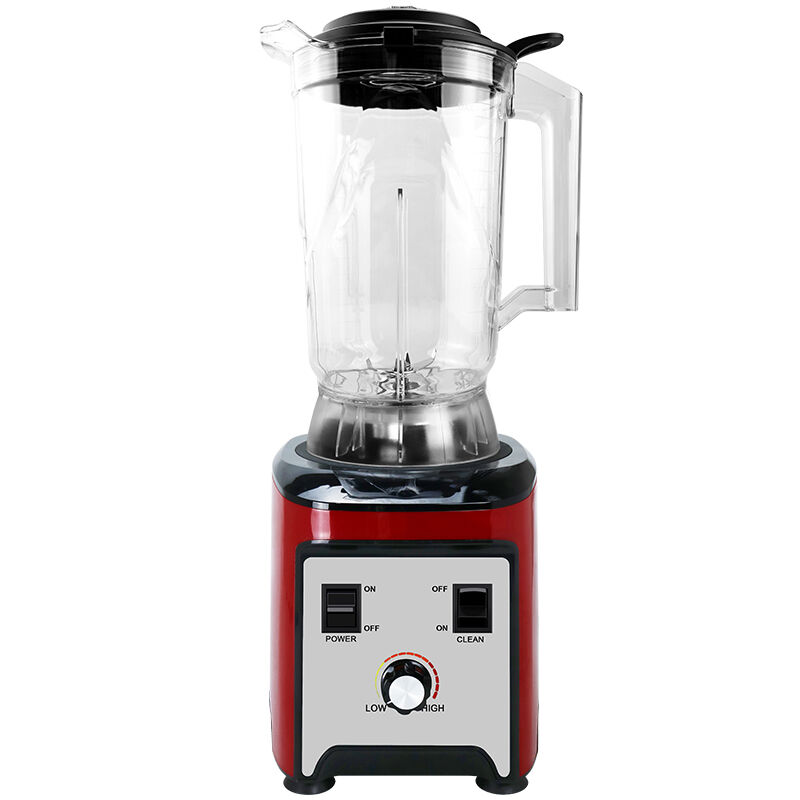
In commercial food preparation environments, blending efficiency directly impacts throughput, product consistency, and operational costs. Traditional analog blenders rely on manual dial controls and operator judgment, creating variability in blend times, power application, and repeatability across shifts. A digital blender addresses these limitations through programmable controls, precise timing mechanisms, and data-driven operation modes that eliminate guesswork and reduce human error. For businesses processing large volumes of smoothies, sauces, soups, or emulsions, the transition from analog to digital technology represents a measurable improvement in production speed, batch consistency, and labor productivity.
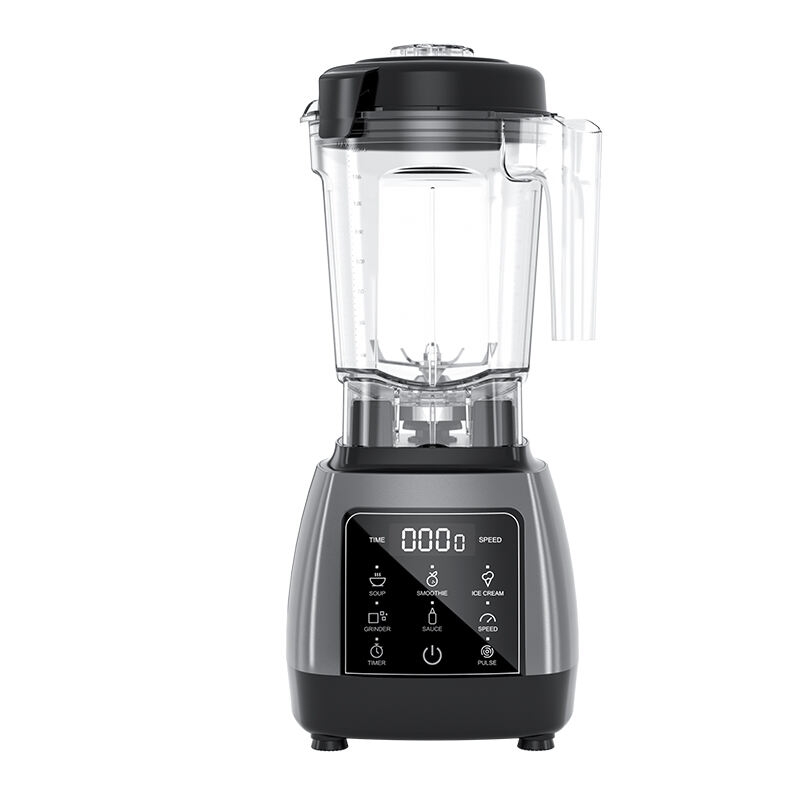
The efficiency gains from digital blending technology stem from three core capabilities: programmable memory functions that store optimal blend cycles for different recipes, touchpad interfaces that enable rapid mode switching without manual adjustment, and microprocessor-controlled motor management that optimizes power delivery based on load conditions. These features work together to reduce blend cycle times, minimize ingredient waste from over-processing, and allow less experienced staff to achieve expert-level results. Understanding how each digital function contributes to operational efficiency helps businesses evaluate whether upgrading to a digital blender aligns with their production goals and justifies the investment compared to continued use of conventional equipment.
Programmable Cycle Memory and Recipe Consistency
Eliminating Manual Timing Variability
One of the most significant efficiency improvements a digital blender provides is the elimination of manual timing errors. In traditional blending operations, staff members must estimate blend duration based on visual and auditory cues, leading to inconsistent results across different operators and shifts. A digital blender allows managers to program exact blend times for each recipe, storing these parameters in memory and executing them with precision every time. This automation removes the cognitive load from operators and ensures that a strawberry smoothie blended at 8 AM achieves the same texture and temperature as one prepared at 3 PM by a different employee.
The memory function typically supports multiple preset programs, enabling establishments to store blend cycles for their entire menu. When an order is received, the operator simply selects the appropriate program number, adds ingredients, and activates the cycle. The digital blender automatically executes the stored speed curve, pulse intervals, and total duration without requiring intervention. This systematic approach reduces average blend time per item by eliminating the trial-and-error adjustments common with manual operation, while simultaneously improving product uniformity across all service periods.
Optimizing Blend Profiles for Different Ingredients
Different ingredients require different blending strategies to achieve optimal texture and consistency. Leafy greens benefit from initial high-speed pulses followed by sustained blending, while frozen fruits require gradual speed increases to prevent motor strain and uneven processing. A digital blender enables operators to create customized blend profiles that match the physical properties and processing requirements of specific ingredient combinations. These profiles can incorporate variable speed stages, timed pulse sequences, and programmed acceleration curves that would be impossible to replicate manually with consistent precision.
By optimizing the blend profile for each recipe, businesses reduce unnecessary processing time and energy consumption. Over-blending wastes electricity and generates excess heat that can degrade sensitive ingredients, while under-blending creates inconsistent texture that may require re-processing. The programmable nature of a digital blender allows continuous refinement of blend profiles based on ingredient quality variations and seasonal product changes, maintaining efficiency as supply chain conditions fluctuate throughout the year.
Touchpad Interface and Operational Speed
Reducing Setup Time Between Batches
The touchpad interface on a digital blender streamlines the transition between different recipes and batch sizes. Unlike rotary dials that require physical rotation and visual alignment with speed markings, touchpad controls allow instant mode selection through single-touch activation. This interface design reduces the time required to switch from one menu item to another, which is particularly valuable during peak service hours when order velocity is high and any delay compounds into customer wait time.
In high-volume operations, the cumulative time savings from faster mode selection can be substantial. If switching from a green smoothie program to a protein shake program takes three seconds with a touchpad versus ten seconds with a manual dial, and this transition occurs 150 times per day, the business saves 17.5 minutes of operator time daily. Over a month, this efficiency gain translates to more than eight hours of recaptured labor that can be redirected to customer service, food preparation, or cleaning tasks that improve overall operational performance.
Simplifying Staff Training Requirements
Digital interfaces with clearly labeled program buttons and intuitive layouts reduce the training time required for new employees to operate blending equipment competently. Instead of teaching staff to recognize appropriate blend speeds by sound and vibration, managers can simply instruct them to press the button corresponding to the menu item being prepared. This simplified operation reduces onboarding time and minimizes the risk of costly mistakes during the learning period.
The standardization enabled by a Digital Blender also reduces quality variation attributable to operator skill differences. In businesses with high employee turnover, maintaining consistent product quality across frequent staff changes is challenging with equipment that requires developed technique and judgment. Digital controls democratize blending expertise by encoding optimal operating parameters into the machine itself, allowing even entry-level workers to produce results comparable to experienced staff members from their first day on the job.
Microprocessor Motor Control and Power Management
Adaptive Load Sensing and Speed Adjustment
Advanced digital blender models incorporate microprocessor-controlled motor management systems that continuously monitor blade resistance and adjust power delivery in real-time. When the blade encounters dense ingredient clusters or frozen material, the controller detects the increased load and can either maintain consistent blade speed by increasing torque or temporarily reduce speed to prevent motor overheating and ingredient ejection. This intelligent power management extends motor life, prevents processing failures, and ensures complete ingredient incorporation without manual intervention.
The efficiency benefit of adaptive load sensing becomes apparent when processing challenging ingredient combinations. Frozen fruit chunks, ice cubes, and fibrous vegetables create variable resistance throughout the blend cycle. A digital blender with load-sensing capability automatically adjusts to these variations, maintaining optimal processing speed without requiring the operator to manually increase or decrease power. This automation eliminates the need for mid-cycle adjustments and prevents the common problem of insufficient blending caused by conservative speed selection to avoid equipment damage.
Preventing Motor Overheating and Downtime
Motor overheating is a leading cause of blender downtime in commercial operations, particularly during extended service periods when equipment runs continuously with minimal cooling intervals. A digital blender can incorporate thermal monitoring that tracks motor temperature and implements protective measures before damage occurs. When temperatures approach critical thresholds, the system may automatically reduce speed, extend intervals between cycles, or display warnings to operators indicating that a brief cooling period is needed.
This proactive thermal management prevents unexpected equipment failures during peak business hours, when a blender breakdown can cascade into order backlogs, customer complaints, and lost revenue. By extending the operational lifespan of motor components through intelligent power management, a digital blender reduces maintenance frequency and the total cost of ownership over the equipment's service life. The initial investment premium for digital controls is often recovered through reduced repair expenses and avoided opportunity costs from unplanned downtime.
Data Tracking and Performance Analysis
Cycle Counting and Maintenance Planning
Many digital blender models include cycle counting features that track the total number of blend operations performed. This data enables predictive maintenance scheduling based on actual usage rather than arbitrary time intervals. Blade assemblies, drive couplings, and motor bearings all have finite service lives measured in operating cycles. By monitoring cumulative usage, businesses can replace wear components before failure occurs, scheduling maintenance during slow periods rather than responding to breakdowns during high-demand hours.
The efficiency advantage of data-driven maintenance extends beyond preventing unexpected failures. Planned component replacement reduces the labor cost of repairs by allowing technicians to complete multiple maintenance tasks during a single service visit rather than making repeated emergency calls for individual component failures. Additionally, proactive replacement of degraded blades maintains consistent blending performance, preventing the gradual efficiency decline that occurs as cutting edges dull and processing times lengthen over months of operation.
Energy Consumption Monitoring
Higher-end digital blender systems may incorporate energy consumption tracking that records power usage per cycle or per operating hour. This data allows managers to identify opportunities for efficiency improvement by comparing energy consumption across different recipes, time periods, or operator shifts. If certain blend programs consistently consume more power than similar recipes, it may indicate suboptimal programming that can be refined to reduce electricity costs without compromising product quality.
For businesses operating multiple locations, energy consumption data from digital blenders enables benchmarking across sites to identify best practices and training opportunities. Locations achieving superior efficiency can serve as models for process improvement at underperforming sites. This continuous improvement approach, enabled by the data capture capabilities of digital equipment, drives incremental gains that compound into significant cost savings across an organization's entire blending operation.
Safety Features and Operational Confidence
Lid Detection and Interlock Systems
Safety interlocks are a standard feature in digital blender designs, preventing motor activation unless the container is properly seated and the lid is securely in place. This protection eliminates the risk of ingredient ejection accidents that can occur with manual equipment when operators attempt to check blend progress by removing the lid during operation. The interlock system improves efficiency by reducing workplace accidents, insurance claims, and the associated administrative burden of incident documentation and investigation.
Beyond preventing injuries, safety interlocks reduce ingredient waste from spills and container displacement. When a blend cycle is interrupted by improper container placement, the digital blender immediately stops operation rather than allowing continued processing that could result in container failure and complete batch loss. This immediate response to unsafe conditions protects both personnel and product, maintaining operational efficiency by preventing costly accidents that disrupt service and require time-consuming cleanup.
Error Code Diagnostics
Digital blenders equipped with diagnostic systems display error codes when operational problems are detected, providing operators and maintenance personnel with specific information about the nature of the malfunction. Instead of relying on subjective descriptions of unusual sounds or behaviors, technicians can reference error codes to quickly identify whether the issue involves motor overheating, drive coupling failure, control board malfunction, or other specific component problems.
This diagnostic capability accelerates troubleshooting and reduces repair time, minimizing the duration of equipment downtime. When a digital blender indicates a specific error code, maintenance staff can arrive on-site with the correct replacement parts and focused troubleshooting procedures rather than conducting time-consuming exploratory diagnosis. For businesses without in-house technical expertise, error codes enable more productive communication with external service providers, ensuring that repairs are completed efficiently during the first service visit.
FAQ
What is the typical payback period for upgrading to a digital blender in a commercial operation?
The payback period for a digital blender investment varies based on operational volume and labor costs but typically ranges from six to eighteen months in high-volume commercial settings. Businesses processing more than one hundred blends per day generally realize faster returns through reduced labor time per blend, decreased ingredient waste, and improved product consistency that reduces customer complaints and remake requirements. Lower-volume operations may experience longer payback periods but still benefit from enhanced product quality and simplified training requirements that improve overall operational efficiency.
Can digital blenders handle the same ingredient types and volumes as commercial analog models?
Digital blenders designed for commercial use offer comparable or superior capacity and ingredient processing capabilities relative to analog models in the same size class. The digital control system enhances rather than limits mechanical performance, providing the same motor power and container capacity while adding programmable operation and intelligent power management. When selecting a digital blender, businesses should evaluate motor horsepower, container volume, and blade design using the same criteria applied to analog equipment, then consider digital features as performance enhancements rather than capacity trade-offs.
How difficult is it to program custom blend cycles into a digital blender?
Programming custom blend cycles into a digital blender typically requires five to fifteen minutes per recipe once operators become familiar with the interface. Most commercial models use intuitive programming sequences that involve selecting speed levels, durations, and pulse intervals through touchpad menus or companion software applications. Manufacturers generally provide detailed programming guides and customer support to assist with initial setup. Once programmed, recipes remain stored in memory indefinitely and can be edited as needed to accommodate ingredient changes or process refinements based on operational experience.
Do digital blenders require specialized maintenance beyond standard commercial blender service?
Digital blenders require the same mechanical maintenance as analog models, including blade sharpening, seal replacement, and drive coupling inspection, with the addition of occasional control board cleaning to remove dust and moisture accumulation. The electronic components in a digital blender are generally reliable and sealed against typical kitchen environmental conditions. Most service issues involve mechanical wear parts rather than electronic failures. Businesses should follow manufacturer-recommended maintenance schedules and ensure that repair technicians have experience with digital control systems, though the fundamental service requirements remain similar to those for conventional commercial blending equipment.
Table of Contents
- Programmable Cycle Memory and Recipe Consistency
- Touchpad Interface and Operational Speed
- Microprocessor Motor Control and Power Management
- Data Tracking and Performance Analysis
- Safety Features and Operational Confidence
-
FAQ
- What is the typical payback period for upgrading to a digital blender in a commercial operation?
- Can digital blenders handle the same ingredient types and volumes as commercial analog models?
- How difficult is it to program custom blend cycles into a digital blender?
- Do digital blenders require specialized maintenance beyond standard commercial blender service?