 Zhongshan city HaiShang Electric Appliances Co,. Ltd
 EN
EN



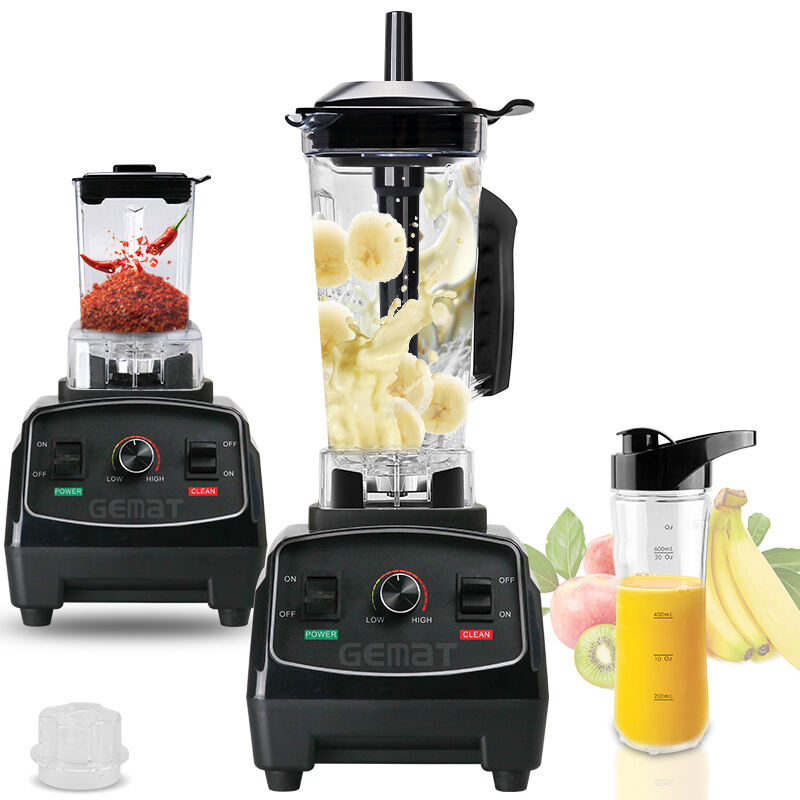
A commercial blender mixer is one of the most versatile and operationally critical pieces of equipment in any food processing, beverage production, or industrial manufacturing environment. Whether you are running a high-volume restaurant kitchen, a beverage bottling facility, or a pharmaceutical compounding operation, the type of commercial blender mixer you select will directly shape your output quality, throughput efficiency, and long-term maintenance costs. Understanding the distinct categories available is not simply a purchasing exercise — it is a foundational operational decision.
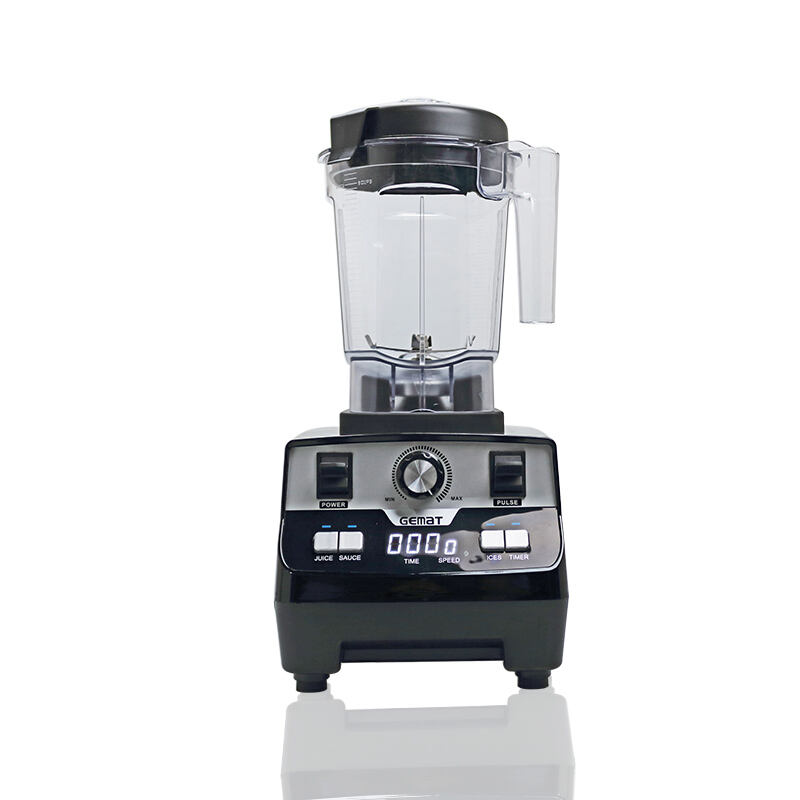
The commercial blender mixer market encompasses a wide spectrum of machine designs, each engineered to handle specific material types, viscosities, batch sizes, and processing conditions. From high-shear emulsification units to planetary mixing systems and ribbon blenders, the differences between these machines go far beyond motor power or container volume. This article breaks down the primary commercial blender mixer types, explains what distinguishes them mechanically and functionally, and provides the context you need to match the right machine to your specific application.
The Core Mechanical Principles Behind Commercial Blender Mixer Design
How Mixing Action Defines Machine Type
Every commercial blender mixer operates on one or more fundamental mixing principles: convective mixing, diffusive mixing, or shear mixing. Convective mixing moves large masses of material from one zone to another, which is typical in ribbon blenders and paddle mixers. Diffusive mixing relies on the random redistribution of particles at a micro level, which is more common in tumble blenders and drum-style units. Shear mixing applies mechanical force to break down particle size or emulsify immiscible liquids, which is the defining characteristic of high-shear commercial blender mixer designs.
Understanding which mixing principle your process requires is the first step in narrowing down the correct commercial blender mixer type. A beverage operation blending fruit concentrates with water needs a very different shear profile than a bakery mixing dry flour with leavening agents. The mechanical principle determines not only the blade or agitator geometry but also the motor torque requirements, vessel shape, and discharge method.
Most industrial-grade commercial blender mixer units are designed around a dominant mixing principle but may incorporate secondary mechanisms. A planetary mixer, for example, primarily uses convective mixing but generates localized shear near the agitator edges. Recognizing this layered functionality helps operators set realistic expectations for blend uniformity and processing time.
Motor Configuration and Drive Systems
The drive system of a commercial blender mixer — whether direct drive, belt drive, or gear-reduced drive — has a significant impact on torque delivery, noise levels, and maintenance intervals. Direct-drive systems offer high efficiency and compact design, making them common in countertop and mid-range commercial blender mixer units used in foodservice. Gear-reduced drives are preferred in heavy-duty industrial commercial blender mixer applications where consistent low-speed torque is needed to process dense or viscous materials.
Variable frequency drives (VFDs) have become increasingly standard in modern commercial blender mixer equipment, allowing operators to adjust rotational speed without changing mechanical components. This flexibility is particularly valuable in multi-product facilities where the same commercial blender mixer must handle materials with different viscosity profiles across production shifts.
High-Shear Commercial Blender Mixer Units
Design Characteristics and Functional Strengths
High-shear commercial blender mixer units are engineered to generate intense mechanical energy at the rotor-stator interface, producing fine emulsions, dispersions, and homogenized blends that cannot be achieved with conventional agitation. The rotor spins at high velocity within a closely toleranced stator, drawing material through the gap and subjecting it to extreme shear forces. This design is particularly effective for reducing droplet size in liquid-liquid systems and for dispersing powders into liquids without agglomeration.
In the food and beverage industry, high-shear commercial blender mixer equipment is widely used for producing sauces, dressings, dairy emulsions, and protein drinks. In the cosmetics and personal care sector, the same technology enables the production of creams, lotions, and gels with consistent particle size distribution. The pharmaceutical industry relies on high-shear commercial blender mixer systems for wet granulation and suspension preparation where blend uniformity is a regulatory requirement.
One important consideration with high-shear commercial blender mixer units is heat generation. The intense mechanical action raises product temperature, which can be problematic for heat-sensitive ingredients. Many industrial models incorporate jacketed vessels or inline cooling systems to manage this thermal load during continuous operation.
Batch vs. Inline High-Shear Configurations
High-shear commercial blender mixer equipment is available in both batch and inline configurations. Batch units process a fixed volume of material per cycle, making them suitable for operations with frequent recipe changes or smaller production runs. Inline units integrate directly into a continuous processing pipeline, drawing material through the mixing head without interrupting flow, which is ideal for high-volume continuous production environments.
Choosing between batch and inline high-shear commercial blender mixer configurations depends on your production volume, cleaning requirements, and process flexibility needs. Inline systems generally offer higher throughput but require more complex CIP (clean-in-place) infrastructure. Batch systems are easier to validate and inspect, which is why they remain the preferred choice in regulated industries.
Planetary and Spiral Commercial Blender Mixer Systems
Planetary Mixer Mechanics and Applications
A planetary commercial blender mixer uses an agitator that rotates on its own axis while simultaneously orbiting the center of the mixing bowl, mimicking the motion of a planet around the sun. This dual-motion pattern ensures that the agitator reaches every part of the bowl, producing highly uniform blends without requiring the operator to manually redistribute material. The result is consistent blend quality across the entire batch volume.
Planetary commercial blender mixer units are the standard choice in bakery and confectionery production, where dough, batter, and cream formulations require thorough incorporation of ingredients with varying densities and textures. The interchangeable agitator attachments — typically a flat beater, wire whip, and dough hook — allow a single commercial blender mixer unit to handle a wide range of product types without mechanical reconfiguration.
Industrial-scale planetary commercial blender mixer systems are available in capacities ranging from 20 liters to several hundred liters, with heavy-duty gear systems capable of handling stiff doughs and dense pastes that would stall lighter equipment. The bowl-lift or bowl-guard design also contributes to operator safety and ergonomic loading in high-throughput environments.
Spiral Mixer Design for High-Viscosity Applications
The spiral commercial blender mixer uses a fixed spiral agitator and a rotating bowl to develop gluten structure in bread doughs more efficiently than planetary designs. Because the spiral agitator works the dough from the bottom up while the bowl rotates, the mechanical energy input is distributed more gently and evenly, reducing dough temperature rise and preserving fermentation activity. This makes the spiral commercial blender mixer the preferred choice for artisan and industrial bread production.
Spiral commercial blender mixer units are less versatile than planetary models in terms of agitator interchangeability, but they excel in their specific domain. For bakeries producing large volumes of yeast-leavened products, the spiral commercial blender mixer delivers superior dough quality and faster mixing cycles compared to alternative designs.
Ribbon and Paddle Commercial Blender Mixer Equipment
Ribbon Blender Configuration and Use Cases
The ribbon commercial blender mixer uses a horizontal trough vessel fitted with a double helical ribbon agitator. The outer ribbon moves material toward the center of the trough while the inner ribbon moves it toward the ends, creating a counter-current flow pattern that produces thorough convective mixing across the entire batch. This design is highly effective for blending dry powders, granules, and free-flowing solids with minimal degradation of particle structure.
Industries that rely heavily on ribbon commercial blender mixer equipment include animal feed production, chemical compounding, spice blending, and nutraceutical manufacturing. The gentle mixing action preserves fragile particles and prevents the segregation of ingredients with different densities or particle sizes, which is a common challenge in dry blending operations.
Ribbon commercial blender mixer units are available in carbon steel, stainless steel, and specialty alloy constructions depending on the corrosiveness and contamination sensitivity of the materials being processed. Sanitary designs with polished interior surfaces and flush-mounted discharge valves are standard in food-grade and pharmaceutical applications.
Paddle Mixer Advantages for Delicate Blending
The paddle commercial blender mixer replaces the ribbon agitator with a series of flat or angled paddles mounted on a central shaft. The paddle geometry produces a slower, more open mixing action that is ideal for blending fragile materials — such as breakfast cereals, coated nuts, or seasoned snack products — where preserving the integrity of individual pieces is as important as achieving blend uniformity.
Some paddle commercial blender mixer designs incorporate a fluidized zone mixing principle, where the paddle speed is high enough to create a semi-fluidized bed of material within the trough. This approach dramatically reduces mixing time compared to conventional ribbon designs and is particularly effective for achieving micro-level blend uniformity in multi-component dry formulations.
Selecting the Right Commercial Blender Mixer for Your Operation
Material Properties as the Primary Selection Driver
The physical and chemical properties of your materials should be the primary driver in commercial blender mixer selection. Viscosity, particle size, abrasiveness, heat sensitivity, and moisture content all influence which machine type will deliver the required blend quality without damaging the product or the equipment. A commercial blender mixer that performs excellently with low-viscosity liquids may be completely unsuitable for stiff pastes or dry powders.
Conducting a material characterization assessment before specifying a commercial blender mixer is a best practice that prevents costly mismatches. Many equipment suppliers offer pilot-scale testing services where your actual materials are processed on representative commercial blender mixer units to validate blend uniformity, cycle time, and energy consumption before full-scale procurement.
Capacity, Cleanability, and Compliance Considerations
Beyond material compatibility, the right commercial blender mixer must align with your production volume requirements, cleaning protocols, and regulatory compliance obligations. Batch size flexibility is important in multi-product facilities where the same commercial blender mixer must accommodate different recipe volumes. Oversizing a commercial blender mixer for typical batch sizes leads to poor mixing efficiency and increased energy waste.
Cleanability is a non-negotiable factor in food, beverage, and pharmaceutical applications. A commercial blender mixer with complex internal geometry, inaccessible welds, or non-draining vessel designs creates contamination risk and increases cleaning downtime. Specifying a commercial blender mixer with CIP compatibility, sanitary surface finishes, and validated cleaning protocols is essential for operations subject to food safety or GMP regulations.
Finally, consider the total cost of ownership rather than just the purchase price when evaluating commercial blender mixer options. Energy consumption, spare parts availability, maintenance intervals, and the availability of local technical support all contribute to the long-term operational cost of any commercial blender mixer investment.
FAQ
What is the difference between a commercial blender mixer and a standard industrial mixer?
A commercial blender mixer is designed for high-frequency, high-volume use in commercial or industrial production environments, with more robust construction, higher motor ratings, and greater material compatibility than consumer-grade equipment. Standard industrial mixers may refer to a broader category that includes large-scale batch reactors and continuous processing systems, while a commercial blender mixer typically implies a self-contained unit optimized for blending and homogenizing specific material types within a defined batch or inline process.
Can a single commercial blender mixer handle both liquid and dry ingredient applications?
Some commercial blender mixer designs, particularly planetary mixers with interchangeable agitators, can handle both liquid and dry ingredient applications within certain viscosity and density ranges. However, machines optimized for one application type — such as a ribbon blender for dry powders or a high-shear unit for liquid emulsions — will generally outperform a generalist commercial blender mixer in their specific domain. For operations requiring both dry and liquid blending, it is often more efficient to specify separate commercial blender mixer units for each application rather than compromising on one machine.
How important is motor power when selecting a commercial blender mixer?
Motor power is an important specification but should not be evaluated in isolation. A commercial blender mixer with high motor power but an inappropriate agitator geometry or vessel design will not deliver better results than a correctly specified lower-power unit. The key is matching motor power to the torque requirements of your specific material at the required processing speed. Undersized motors in a commercial blender mixer lead to overheating, premature failure, and inconsistent blend quality, while oversized motors waste energy and may generate excessive shear in sensitive applications.
What maintenance practices extend the service life of a commercial blender mixer?
Regular lubrication of bearings and drive components, inspection of seals and gaskets for wear, and prompt replacement of agitator blades showing signs of erosion or deformation are the most impactful maintenance practices for a commercial blender mixer. Cleaning protocols should be followed consistently to prevent material buildup that can cause imbalance, corrosion, or contamination. Keeping a log of operating hours, temperature readings, and vibration levels helps identify early signs of mechanical wear before they result in unplanned downtime for your commercial blender mixer.
Table of Contents
- The Core Mechanical Principles Behind Commercial Blender Mixer Design
- High-Shear Commercial Blender Mixer Units
- Planetary and Spiral Commercial Blender Mixer Systems
- Ribbon and Paddle Commercial Blender Mixer Equipment
- Selecting the Right Commercial Blender Mixer for Your Operation
-
FAQ
- What is the difference between a commercial blender mixer and a standard industrial mixer?
- Can a single commercial blender mixer handle both liquid and dry ingredient applications?
- How important is motor power when selecting a commercial blender mixer?
- What maintenance practices extend the service life of a commercial blender mixer?